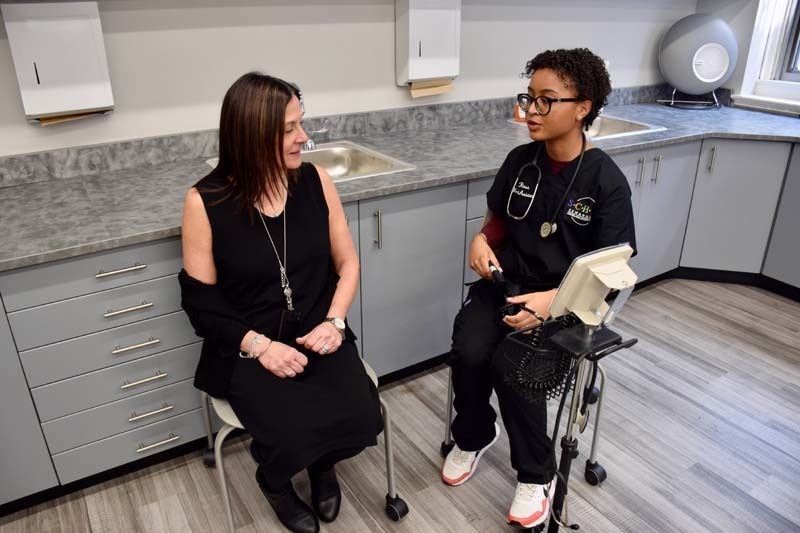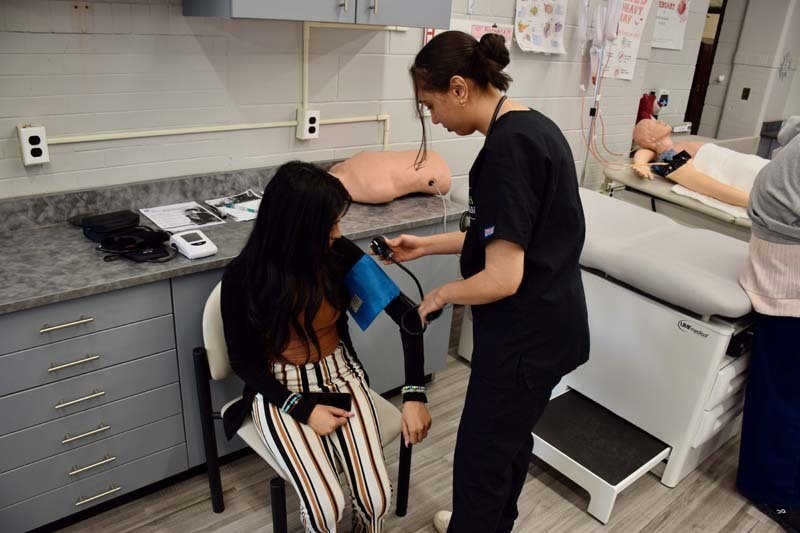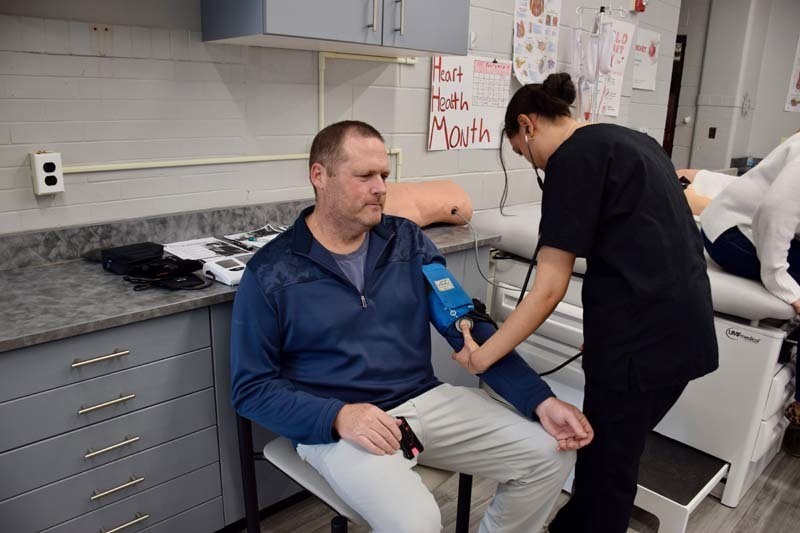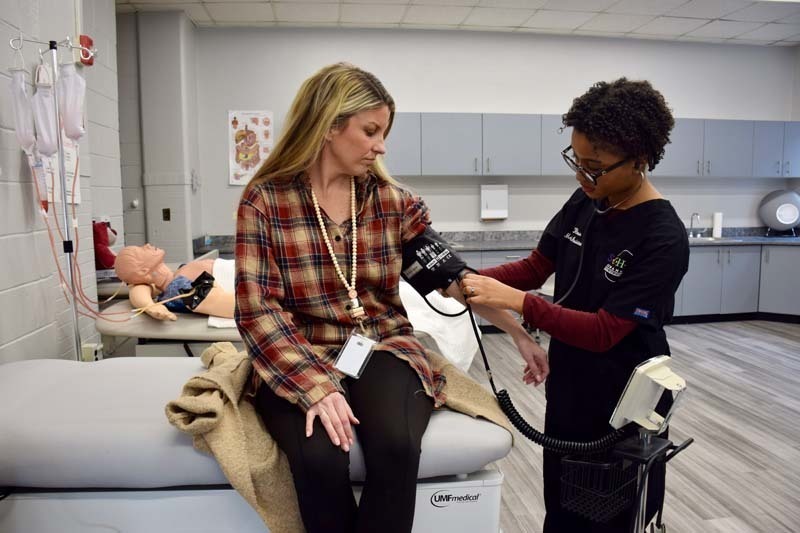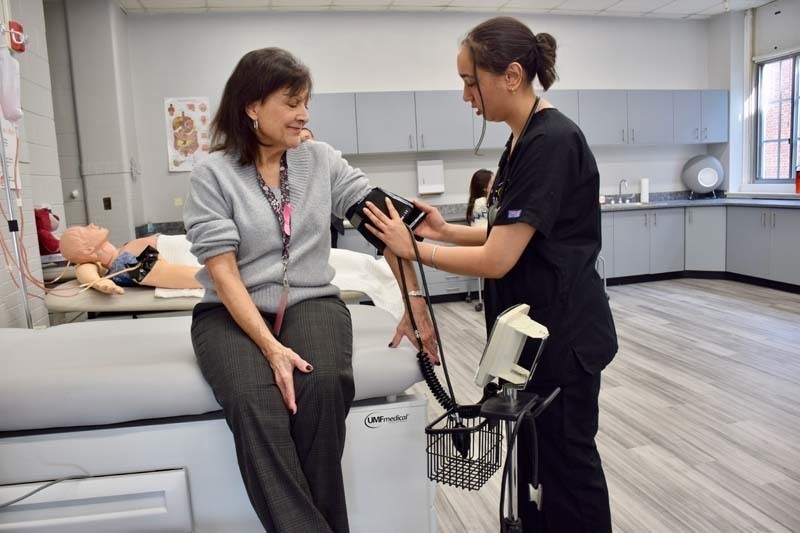
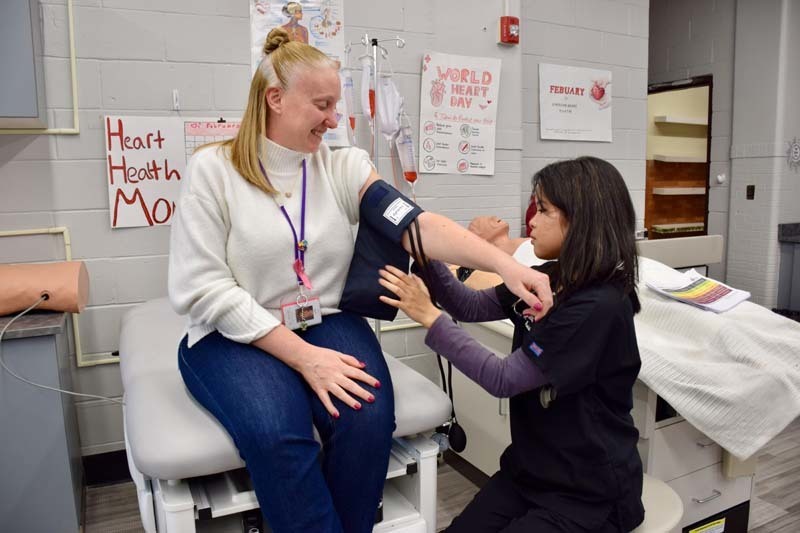
Throughout February, in recognition of American Heart Month, second-year Sewanhaka District students in the Medical Assisting Career and Technical Education program provided free blood pressure screenings daily to faculty and staff, promoting awareness of heart health and the prevention of cardiovascular disease.
Students educated participants on understanding their numbers, including the standard normal blood pressure reading of 120/80 and provided charts outlining healthy ranges. When readings fell outside the normal range, whether indicating hypertension or hypotension, staff members received informational pamphlets and guidance on next steps. Students also discussed lifestyle strategies to help lower blood pressure beyond medication, reinforcing the importance of heart-healthy habits such as exercising, eating healthy foods and maintaining healthy weight.
During each screening, students asked important patient-care questions such as “Do you have a preferred arm for readings?” “What is your normal blood pressure?” and “Do you take any medications for your blood pressure?”
Each Medical Assisting student conducted screenings at least twice throughout the month, totaling approximately four hours of direct patient-facing experience per student. This hands-on interaction is invaluable in strengthening communication, clinical accuracy and professional confidence.
In addition to staff screenings, students counseled interested students on heart health by discussing healthy height-to-weight ratios and educating about maintaining a weight appropriate for their height.
The Medical Assisting program, now in its third year, is one of the district’s newest CTE offerings. With 24 seats available per course, students must apply for acceptance. The program offers dual enrollment opportunities, allowing students to earn 13 college credits through Nassau Community College, with coursework aligned to college-level standards. Upon completion, students are eligible to sit for national certification as medical assistants.
Providing the Medical Assisting II students with the opportunity to perform blood pressure screenings on faculty and staff during American Heart Month is invaluable,” Instructor Lori Lorusso, MSN, RN, said. “These real-world patient interactions help students build confidence, strengthen clinical skills and understand the importance of preventive care in a meaningful way.”